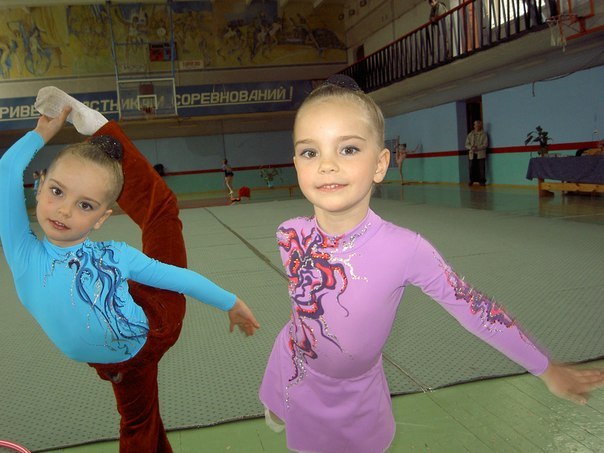
Rhythmic gymnastics, is one of the most complex and demanding disciplines, also is one of the most eye-catching sports for all ages. Choreographies that tell a story, impressive twists, enviable flexibility and almost impossible tricks with hoops, balls, clubs and ribbons are some of the elements that make rhythmic gymnastics one of the most watched sports in the Olympic Games. As in synchronized swimming and artistic gymnastics, they use makeup and a specific hairstyle to perform the exercises without problems, but in the beginning gymnastics had a less complex look.

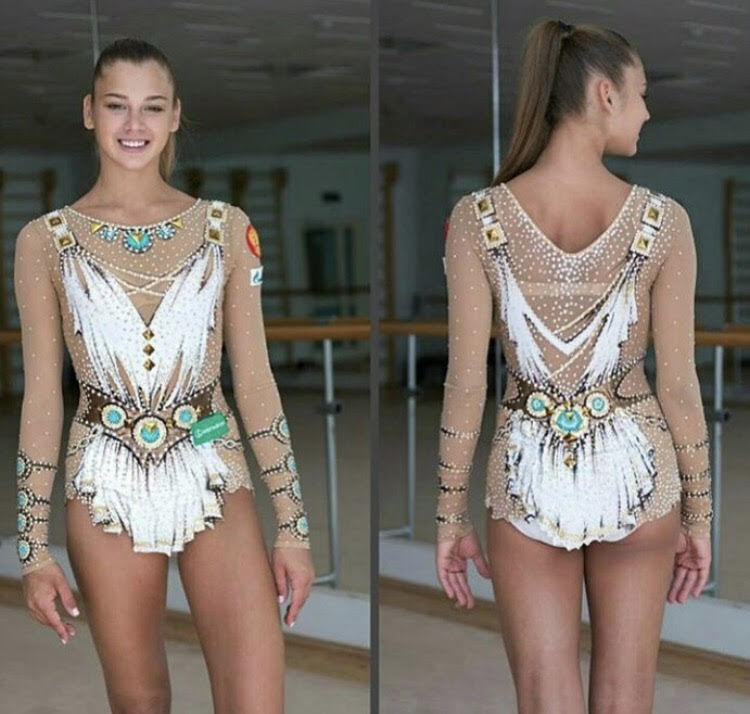
The evolution of rhythmic gymnastics has not only meant a change in the sports aspect of the code, but also in the aesthetics. From the simple leotard with one or two colors we have moved to a display of creativity in which rhinestones all kind of fabrics, feathers, pearls, fringes, frills, glitter, flowers and drawings are combined into leos that end up to be pieces of art.
Some of the leotards are adapted from haute couture and a Russian design oscillates between 1,000 and 6,000 euros. Due to its diversity and creativity, the production of a rhythmic gymnastics design is a laborious process that a few people know step by step, although the final result is not unnoticed: colorful fabrics, original forms and countless rhinestones that will prevent you from taking your eyes of off the gymnast performing on the carpet.
Nowadays there are no limitations regarding the making of rhythmic gymnastics leotards and new elements are added that improve the designs, such as the transparent fabrics used by Aleksandra Soldatova or the feathers introduced by the Russian group for the OG Rio 2016. Do you want to know more about the process of creating a leotard? In this post we tell you everything thanks to Ilaria Cortonesi, from
Arteila Style, graduated in Fashion from Liceo Artistico of Arezzo and Painting at the Academy of Arts in Florence.
Making a leotard
An elite gymnast uses a different leotard for each of her four exercises, some even get to wear several throughout the season for the same apparatus as is the case of Irina Viner gymnasts. Although some borrow them from their teammates when it comes to very high cost designs, the manufacturing process starts from a song. In the case of Russia, there are many studios who propose their leos to the national team so that the first gymnasts promote their creations, but without considering the exercises or the melody is difficult to create a proper leotard.
Leos designed for Aleksandra Soldatova and never used because didn't fit the music.
So, music is the basis for setting up the exercise and start creating several sketches; rhythm, melody and lyrics will determine colors, shapes and even drawings tto add to the leo's fabric. Thanks to the innovations of the code, today gymnasts can use two routines with lyrics, which enriches in variety and provides more elements of inspiration to coaches and dressmakers. You can listen to the music cut we used here:
With a dramatic melody for a ball exercise, Ilaria's proposal is a combination of white and lilac tones on transparent tulle and sleeveless, a sweet and romantic design. Here you can see the sketch:
Time to sew and make it shine
Once the sketch is approved and with the measures of the gymnast, the process of sewing will depend on the technique used to make it. Ilaria Cortonesi, painting teacher and expert in creating leotards and dance costumes, opted for a hand-painted design, which is a more elaborate process and requires years of anticipated experience so that sketch and final result are identical. Approximately six hours of painting are necessary for this specific design, then let it dry and start to sew.

The decoration is one of the key moments of the design, we all want to shine the maximum since the swarovski were incorporated in the rhythmic gymnastics. This specific leotard has 2000 Preciosa rhinestones, 50 round sew on pieces, also silver glitter and pearls.
How long does it take to apply this number of strass? It will depend on the hability of each person. Many mothers, coaches and gymnasts decorate their leotards themselves or ask the dressmakers to decorate most of them to have a guide and continue on their own. Eight hours were necessary for this creation of Ilaria, now ready to shine with its own light.
Matching the leo with the apparatus
Once the process of creating a leotard has been completed, it is time to look for the right color of apparatus so that it matches the history of the exercise and music. In this case we have two very fashionable options on the international scene: a silver ball and a raspberry color. Which combination do you like the most? We will take note of the suggestions that you leave us by social networks!


We wned the post here, letting you take the last choice of the process: silver or raspberry? I hope I provided you all more information of RG leotards and a little introduction of the making process and the working hours behind those designs that we love to see on the carpet. A would like to thank Ilaria for making this beautiful leo and all the sketches she made inspired by the music, as well as the hours dedicated to painting and decorating it with so much affection. It has been a pleasure to see the step by step of this design and to enjoy the final result, take note for the next season and do not hesitate to trust Arteila Style.
You can follow Ilaria Cortonesi and her leotards:
Contact: ila.co87@hotmail.it